
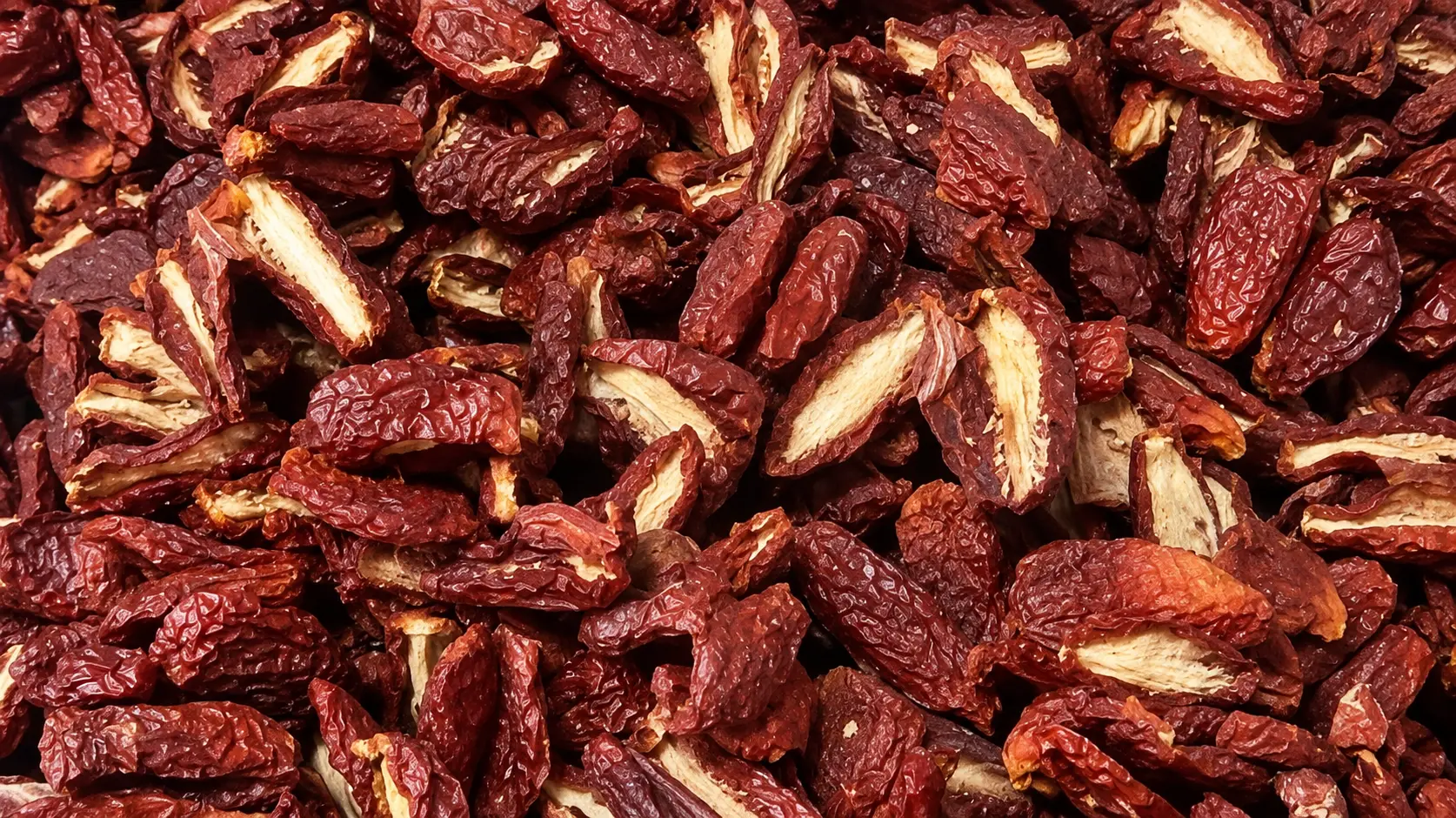
Seven Criteria That Distinguish Premium Sun-Dried Tomatoes
Two bags of sun-dried tomatoes can look identical on the day you buy them. Six weeks later, one is still supple, fragrant and full of flavour, while the other has turned sticky, dull and slightly musty. Whether you are a chef, an importer or a food brand buying bulk sun-dried tomatoes, knowing how to spot the difference before you pay protects both your margins and your reputation.
Tunisia has an established sun-dried tomato industry and a solid reputation for exceptional quality at a competitive price, built on generous sunshine, generations of know-how and short shipping routes to Europe. According to ONAGRI, Tunisia exported 63,800 tonnes of tomatoes worth TND 263.3 million in the first eight months of 2026 alone. This guide draws on the UNECE DDP-19 international standard for dried tomatoes and the Tunisian Good Production Practices Guide to give you seven simple, reliable checks, whether you are buying a few kilos or a full container.
The seven criteria of premium sun-dried tomatoes at a glance:
- Clean, sound and carefully sorted
- A natural, consistent colour
- The right moisture content and texture
- A rich aroma and balanced flavour
- Complete, transparent labelling
- Full traceability and documented quality control
- Controlled storage from producer to buyer
Criterion 1: Clean, Sound and Carefully Sorted
Cleanliness is the one criterion with no room for compromise. Visible mould, insects, stalks or debris, any hint of fermentation or a damp surface are all enough to reject a lot outright, whatever its price or colour.
Once that box is ticked, step back and look at the batch as a whole. Well-opened halves of a similar size tell you the tomatoes were sorted with care, and that kind of attention usually shows up everywhere else in the product.
Criterion 2: A Natural, Consistent Colour
It is tempting to reach for the brightest, glossiest tomatoes, but that vivid red is often the work of sulphur dioxide rather than the sun. Unsulphured tomatoes naturally dry to a deeper, darker shade, and that is not a defect in any way.
What really matters is consistency. The UNECE standard expects top-class produce to show a uniform colour across the lot. Scattered dark or scorched patches, on the other hand, usually point to drying that was not properly controlled. The standard also sets defect tolerances for each commercial class, so a lot should be judged against its declared category, not by colour alone.
Criterion 3: The Right Moisture Content and Texture
There is no single perfect texture, only the right one for the job, and as the international standard makes clear, it all comes down to moisture. Soft, pliable tomatoes (25–50% moisture) are ideal in oil or as antipasti, but they are also the most fragile. Firm but pliable tomatoes (18–25%) are the true all-rounders, holding their shape in sauces and salads while keeping well for months. Reaching the right level takes time: according to the Tunisian good practice guide, traditional sun-drying lasts four to five days on average, depending on the target moisture and the weather.
Drier grades have their place too. Very firm tomatoes (12–18%) dice cleanly on industrial lines, and hard, brittle ones (6–12%) are exactly what powders and spice blends require. When buying in bulk, always ask for the measured moisture content and tell your supplier how you plan to use the product.
Criterion 4: A Rich Aroma and Balanced Flavour
Open the bag and breathe in: a great sun-dried tomato smells like summer in concentrate, warm, fruity and rich. Any musty, fermented or rancid note is a clear signal to walk away.
A salty edge is perfectly normal, since salt is often used during drying, and a faint preservative note is acceptable when sulphur dioxide is used within legal limits. For a professional tasting, compare samples of the same texture and judge aroma, saltiness and acidity separately.
Criterion 5: Complete, Transparent Labelling
A quality product has nothing to hide, and its label proves it. Look for the country of origin, the format, the commercial class, the moisture content, the ingredients (including sulphites), the lot number, the best-before date and the packer’s details.
The UNECE standard also requires every package to be uniform in origin and quality. If a box mixes origins or grades without saying so, treat it as a warning sign rather than a minor detail.
Criterion 6: Full Traceability and Documented Quality Control
A reliable sun-dried tomato supplier will share a technical data sheet without hesitation, covering origin, drying method, moisture, additives, storage conditions and test results. If that document is vague or missing, the product probably is too.
This is the standard we hold ourselves to at Yakutta. Our technical data sheet puts a number on every key criterion: moisture of 20% or less, sulphur dioxide below 10 mg/kg (under the EU sulphite labelling threshold), defects capped at 3%, and tomatoes processed within 36 hours of harvest. Each lot is backed by microbiological and pesticide testing from accredited external laboratories, and you can request our full technical data sheet at any time.
The Tunisian industry’s good practice guide calls for HACCP-based quality control from field to box, with monitored drying, careful sorting and controlled storage. Keep in mind that “sun-dried” on a label is a marketing term: what counts is the process behind it and the checks that back it up.
Criterion 7: Controlled Storage from Producer to Buyer
Even the finest sun-dried tomatoes will deteriorate if they are stored carelessly. Keep them cool, dry and airtight, reseal the pack after opening, and make sure oil-packed tomatoes stay fully covered and refrigerated once the jar is open.
If tomatoes feel sticky or limp to the touch, moisture has found its way in. That is usually the first and clearest sign that storage, rather than production, has let the product down.
Sun-Dried Tomato Quality Checklist for Buyers
☐ Clean lot: no mould, insects or debris
☐ No off-odours (fermentation, mustiness, rancidity)
☐ Even colour across the lot
☐ Texture suited to your use
☐ Clear origin, ingredients and lot number
☐ Measured moisture content provided
☐ Test reports matching your specifications
Frequently Asked Questions About Sun-Dried Tomato Quality
Are brighter red sun-dried tomatoes better? Not necessarily. A vivid red often means more sulphur dioxide, while a darker, unsulphured tomato can be of excellent quality.
What is the difference between sun-dried and semi-dried tomatoes? Mainly moisture. Semi-dried tomatoes can contain up to 50% water and are soft and tender, while fully dried ones are firmer and keep longer.
Does “sun-dried” guarantee quality? No. It describes a method, not a result, so always ask how the tomatoes were dried and checked.
Why choose Tunisian sun-dried tomatoes? Intense sunshine, long-standing expertise and an industry that follows international standards, all at a price that is hard to match. The numbers back it up: Tridge market data puts Tunisian sun-dried tomato exports at around 5,556 tonnes, worth USD 17.2 million, in 2023, mainly to Italy and other European markets, while ONAGRI reports that the average export price of Tunisian tomatoes rose 14.6% to TND 4.12/kg in 2026.
Conclusion: Choosing Premium Tunisian Sun-Dried Tomatoes
Spotting a premium sun-dried tomato means combining what your senses tell you with what the documents prove. Look, smell and touch first, then check the label, the traceability and the storage conditions. A good supplier can back up every claim, and a great one is happy to show you how.
Rules and limits vary by destination market. Always check the regulations that apply before selling.
Sources
- UNECE, Standard DDP-19 concerning the marketing and commercial quality control of dried or dehydrated tomatoes, 2024 edition (French version).
- ONAGRI, La balance commerciale alimentaire à fin août 2026 (all tomato categories, in French).
- Tridge, Sun-Dried Tomatoes: Tunisia market data (2023 export data, HS code 071290).
- GICA and PAMPAT/UNIDO, Good Production Practices Guide for Tunisian Sun-Dried Tomatoes (in French), first edition, February 2022.
- Yakutta (Terra Taste Trading), Technical Sheet — Sun-Dried Tomatoes, ref. DC-SM05, version 01, July 2026.
 EN
EN  FR
FR  ES
ES  DE
DE  IT
IT