
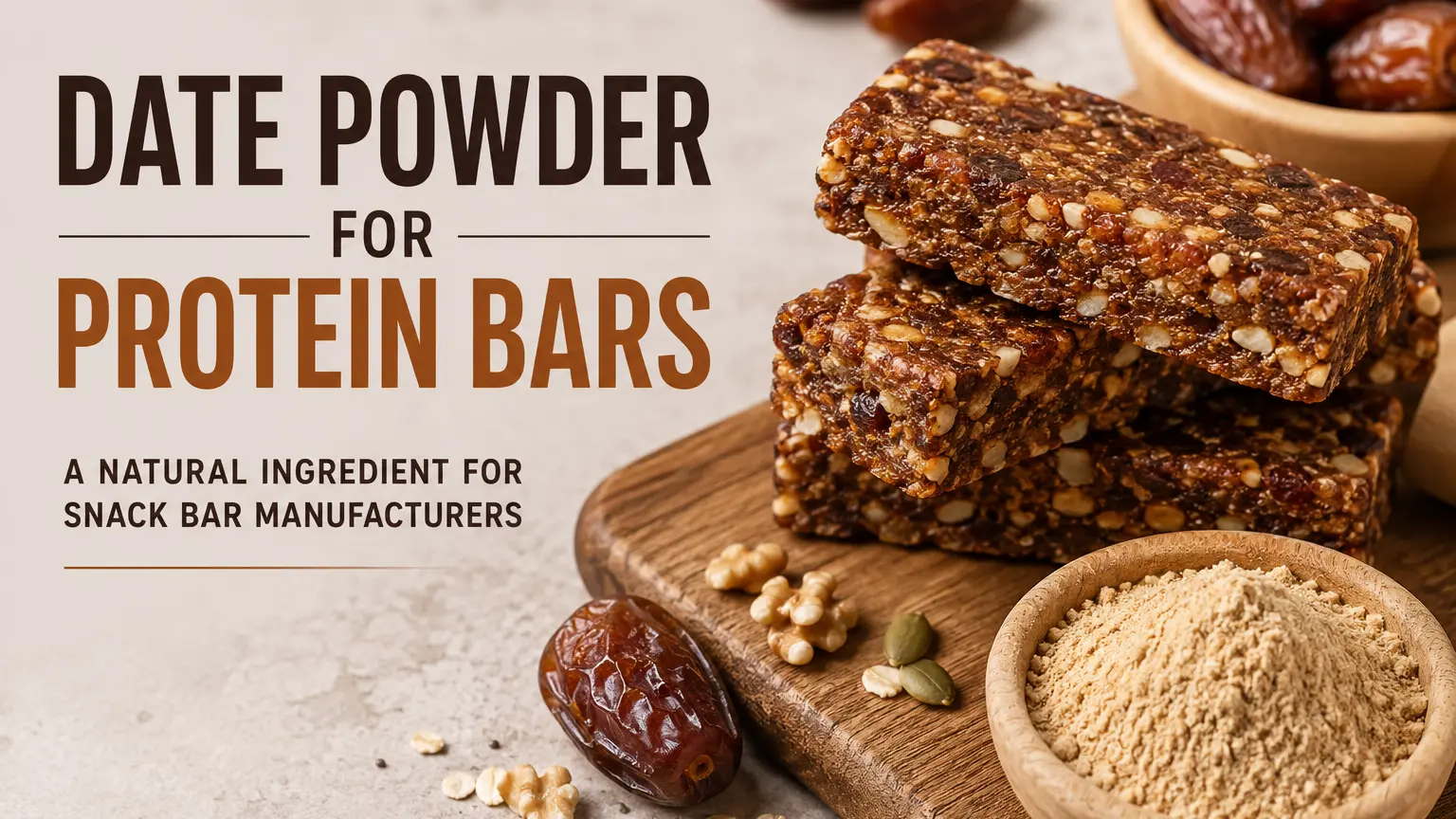
Date Powder for Protein Bars Manufacturers
The snack bar and protein bar market is becoming more competitive, more functional, and more ingredient-conscious. Consumers want convenient products that deliver nutrition, taste, clean labels, and recognizable ingredients. For manufacturers, that means every ingredient has to work harder. It must support flavour, texture, nutrition claims, processing performance, and commercial positioning at the same time.
This is why date powder for protein bars is gaining attention among snack brands, private-label manufacturers, and food ingredient buyers. It offers natural sweetness, a warm caramel-like flavour, and a fruit-based ingredient story that fits modern clean-label product development. For companies producing protein bars, energy bars, cereal bars, granola bars, and functional snacks, date powder can be more than a sweetener. It can become part of the product’s value proposition.
Why the Market Supports Better Bar Ingredients
The commercial opportunity is clear. The global snack bars market was valued at USD 29.59 billion in 2024 and is projected to reach USD 44.25 billion by 2030, growing at a CAGR of 7.0%. The global protein bar market was valued at USD 15.8 billion in 2025 and is projected to reach USD 24.2 billion by 2033, growing at a CAGR of 5.5%.
These figures show that bars are no longer a narrow sports nutrition product. They are used as breakfast replacements, gym snacks, office snacks, lunchbox products, travel food, and healthier indulgences. As the category expands, brands need ingredients that help them stand out on shelf and online. Date powder for protein bars gives manufacturers a way to improve sweetness, taste, and label appeal while responding to demand for more natural food ingredients.
What Date Powder Adds to Snack Bar Formulation
Date powder is produced from dried dates that are milled into a powder. Because it comes from whole fruit, it brings natural sugars, fibre, minerals, colour, and flavour compounds into the formulation. In bar manufacturing, this can help create a richer sensory profile than refined sugar alone.
Date powder works especially well with oats, cocoa, nuts, seeds, peanut butter, almond butter, coconut, vanilla, cinnamon, whey protein, pea protein, rice protein, and other common bar ingredients. Its natural caramel and dried-fruit notes can soften the bitterness of plant proteins and add depth to chocolate, nut, and salted caramel flavour systems.
For brands developing date powder for snack bars, the ingredient can support a more premium product story. It helps manufacturers move away from purely refined sweetening systems and toward fruit-based sweetness that consumers can understand immediately.
Clean-Label Value for Product Development
The clean-label ingredients market was valued at USD 44.97 billion in 2025 and is projected to reach USD 83.44 billion by 2034. This growth reflects a major shift in food purchasing behaviour. Consumers are reading labels more carefully, and retailers are giving more space to products that feel simple, natural, and transparent.
Date powder fits this direction because it can be positioned as a clean label sweetener with a familiar origin. Instead of relying only on refined sugar, glucose syrup, or artificial sweeteners, manufacturers can use a fruit-derived ingredient that supports a more natural product message.
This does not mean date powder is a calorie-free or sugar-free ingredient. It still contributes natural sugars and carbohydrates. The commercial advantage is different. It helps brands create bars with a more recognizable ingredient declaration, a richer flavour profile, and stronger alignment with naturally sweetened or no refined sugar positioning, depending on the final formulation and regulatory requirements.
Date Sugar Glycemic Index and Why It Matters in Bar Formulation
For snack bar and protein bar manufacturers, the glycemic index of date-based ingredients can be a useful product-development consideration. Glycemic index, or GI, measures how quickly a carbohydrate-containing food raises blood glucose compared with pure glucose. In published research, whole date varieties have generally shown low-to-medium GI values, with one study reporting GI ranges of 46 to 55 in healthy subjects and 43 to 53 in people with type 2 diabetes. Another review notes that dates have a GI of around 50, although values can vary by variety, processing method, serving size, and the other ingredients used in the final product.
This is commercially relevant because date sugar and date powder are often considered by brands looking for a more natural alternative to refined sugar. While date powder still contains natural sugars and carbohydrates, it also comes from whole fruit and contains fibre and other naturally occurring compounds from dates. In a protein bar or snack bar, the final glycemic response will not depend on date powder alone. It will also be influenced by protein content, fat content, fibre level, serving size, moisture, processing, and the full carbohydrate system used in the recipe.
For B2B positioning, this means manufacturers should avoid overclaiming that date powder makes a product “diabetic-friendly” or “blood-sugar safe” unless the final product has been properly tested and the claim is legally supported. A stronger and more accurate message is that date powder can support clean-label sweetening, fruit-based sweetness, and reduced reliance on refined sugar while contributing to a more balanced formulation when used alongside protein, fibre, nuts, seeds, and whole grains.
Why Protein Bar Manufacturers Are Testing Date Powder
Protein bar manufacturers often face a common challenge: protein can make bars dry, dense, bitter, or chalky. This is especially true in plant-based bars using pea, rice, or blended plant proteins. Sweeteners, fibres, syrups, fats, and flavour systems must work together to create a bar that tastes good and remains stable through shelf life.
Date powder for protein bars can help improve the eating experience by adding natural sweetness and a rounded flavour base. It can also complement cocoa, nut, oat, and caramel profiles that are already popular in the category. For brands selling into health food stores, supermarkets, gyms, sports nutrition channels, and e-commerce, this can create a stronger bridge between functional nutrition and everyday taste. A natural sweetener for protein bars must do more than reduce reliance on refined sugar. It must also work in real manufacturing conditions. That is why particle size, moisture content, flavour consistency, microbiological quality, and shelf-life behaviour matter when evaluating date powder for commercial use.
Commercial Sourcing Considerations
For B2B buyers, choosing the right supplier is just as important as choosing the ingredient. A bulk date powder supplier should be able to provide consistent quality, technical documentation, food safety standards, and packaging formats suitable for industrial production.
Before ordering, manufacturers should request a specification sheet, certificate of analysis, allergen statement, shelf-life details, origin information, moisture data, microbiological limits, and available certifications. Organic, halal, kosher, or other certifications may be important depending on the brand, market, and retailer requirements. Commercial buyers should also ask about minimum order quantity, lead time, pallet configuration, export documentation, private-label support, and sample availability. In bar manufacturing, consistency matters because small changes in moisture, colour, sweetness, or particle size can affect the final product’s texture and consumer experience.
Date Powder as a Differentiator in Bar Innovation
The date powder market itself is growing. It was valued at USD 2.436 billion in 2024 and is projected to reach USD 5.94 billion by 2035, with an expected CAGR of 8.44%. This growth is being supported by interest in natural sweeteners, clean-label ingredients, functional foods, and alternatives to refined sugar.
For bar brands, the opportunity is not only technical. It is also commercial. Date powder can help create products that feel more natural, more premium, and more aligned with current snacking trends. It can support claims around fruit-based sweetness, clean-label formulation, and better ingredient transparency when used correctly within local labelling rules. The strongest opportunities are likely to come from products where date powder supports both flavour and positioning. Chocolate protein bars, peanut butter bars, oat and nut bars, plant-based nutrition bars, kids’ snack bars, and meal replacement bars can all benefit from the ingredient’s taste profile and consumer-friendly image.
Conclusion
Date powder for protein bars is a practical ingredient for manufacturers looking to improve sweetness, flavour, and clean-label appeal in a growing category. It is not simply a sugar replacement. It is a formulation tool, a positioning asset, and a sourcing opportunity for brands that want to develop better snack and nutrition bars.
For manufacturers planning a new bar launch or reformulating an existing product, the next step is commercial testing. Request samples, review specifications, compare suppliers, and test date powder in the full formulation before scaling. The right ingredient partner can help your brand create bars that meet consumer expectations while supporting efficient, reliable production.


 EN
EN  FR
FR  ES
ES  DE
DE  IT
IT