
Carob Syrup vs Date Syrup: Which Fits Your Formulation?
Both are natural Mediterranean fruit syrups, thick, dark and sweet, yet they behave quite differently in production. Here is how they compare on sugars, specifications, flavour and applications.
At Yakutta, we source bulk carob syrup and date syrup from North Africa, where these two Mediterranean ingredients have their roots and where traditional know-how continues to shape their production. Working with carefully selected partners, we help food manufacturers identify the right product and specifications for their formulation, manufacturing process and quality requirements.
Carob syrup and date syrup: origin and sugar profile
Carob syrup (carob molasses) is concentrated from carob pods (Ceratonia siliqua L.), and date syrup (date honey) from dates (Phoenix dactylifera L.). Both are used in bakery, beverages, dairy, confectionery and nutrition products.
The key difference is the sugar profile: carob syrup is mainly sucrose (about 50–53 g per 100 g of dry matter), while date syrup is almost entirely glucose and fructose (about 43 g each). [1, 2] This shapes sweetness, browning, crystallisation and baking behaviour.
Carob syrup is also richer in potassium, calcium, phenolics and antioxidants, while both contain under 1 g of fat and about 230–300 kcal per 100 g. [1–5]
Note: indicative values from published studies, not product specifications; nutrition or health claims require analysis of the finished product.
Technical specifications
Key industrial parameters include °Brix, pH, viscosity, water activity, colour, sugar profile and HMF, and they vary widely between suppliers. [1, 2, 6–8]
Carob and date syrups showed distinct physicochemical profiles under comparable analytical conditions. Carob syrups contained 75.3–80.3 °Brix and had a higher pH (4.3–5.2; mean 4.7 ± 0.2) than date syrup (75.5 °Brix; pH 4.01 ± 0.03). Carob syrup was richer in sucrose (52.9 ± 17.9 g/100 g dry matter), whereas date syrup was dominated by fructose (43.2 ± 0.8 g/100 g) and glucose (42.9 ± 0.8 g/100 g). Carob syrup also showed higher protein content (2.5 ± 0.9 vs. 1.55 ± 0.07 g/100 g) but greater variability in browning and HMF. HMF levels ranged from 520 to 4,049 mg/kg in carob syrups, with a mean of 1,379 ± 809 mg/kg, compared with 1,987 ± 283 mg/kg in date syrup. Overall, date syrup exhibited a reducing-sugar-rich profile and higher average HMF, whereas carob syrup contained more sucrose and proteins.
Parameter | Carob syrup | Date syrup |
Soluble solids | 75.3–80.3 °Brix | 75.5 °Brix |
pH | 4.3–5.2 | 4.01 ± 0.03 |
Main sugars | Sucrose: 52.9 ± 17.9 g/100 g | Glucose: 42.9 ± 0.8 g/100 g; fructose: 43.2 ± 0.8 g/100 g |
Proteins | 2.5 ± 0.9 g/100 g | 1.55 ± 0.07 g/100 g |
HMF | 520–4,049 mg/kg; mean 1,379 ± 809 | 1,987 ± 283 mg/kg |
Main characteristic | More sucrose, proteins and phenolic compounds | More glucose and fructose; higher mean HMF |
Note: indicative values, not universal standards; “study” refers to Tounsi et al. Viscosity must be stated with its temperature and method, and HMF checked batch by batch.
For our own values, see the carob syrup data sheet and the date syrup data sheet. [9, 10]
When you request a technical file, ask for:
- °Brix, pH, density and water activity
- Viscosity, with the method and test temperature
- Sugar profile and HMF
- Microbiology, pesticide and heavy-metal results
- Certificate of analysis, allergen and GMO statements
- Shelf life, packaging, origin and certifications (HACCP, ISO 22000, BRCGS, IFS or organic)
Sensory profile: flavour, colour and mouthfeel
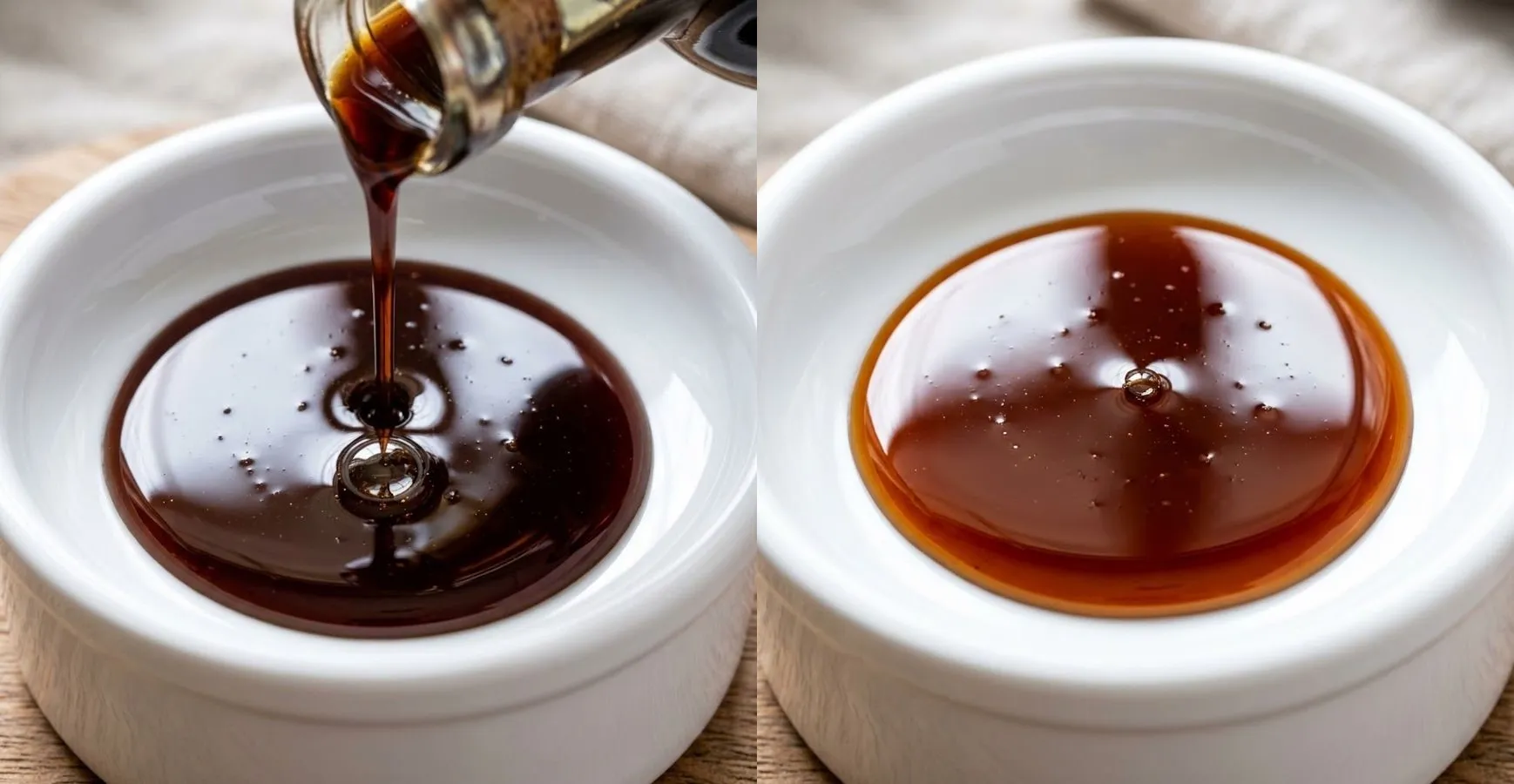
Neither syrup is neutral: colour, aroma and body are often the real reason to choose one. [11]
Carob syrup is malted and roasted, with cocoa notes, a full, slightly bitter taste and a coating texture; watch for burnt notes.
Date syrup is fruity and smooth, with a date-caramel character and a lighter body; watch for fermented or sour notes.
Industrial applications of carob syrup and date syrup
Beyond sweetness, both add colour, flavour, body and binding. [3, 12–14]
Date syrup leads in energy bars, as a natural binder, and as a pouring syrup for pancakes and waffles.
Carob syrup leads in cocoa-style spreads and dark, savoury glazes.
Both suit biscuits, granola, desserts, drinks and sauces: carob for dark, cocoa-style profiles, date syrup for fruity, honey-style ones. Date syrup browns faster, so always test at production dosage.
Carob syrup or date syrup: how to choose for your product
The two are not fully interchangeable: base your choice on flavour, colour, sugar behaviour and positioning, using verified specifications and cost in use rather than price per kilo.
Choose carob syrup for a dark colour, a roasted flavour and a Mediterranean story; choose date syrup for fruity sweetness, bars and a natural-energy positioning.
FAQ: carob syrup vs date syrup
Can carob syrup replace date syrup in a recipe?
Only partly: carob syrup is higher in sucrose, darker and more roasted. Test both at the same °Brix and dosage before switching.
Are the values in this article product specifications?
No. They are indicative values; for purchasing, rely on the supplier’s TDS and the certificate of analysis for each batch.
Bulk carob syrup and date syrup supplier We supply both carob syrup and date syrup, in conventional and organic grades, alongside date paste, date powder and other Mediterranean ingredients. If you are comparing the two for a new product, our carob syrup and date syrup data sheets give the full specifications, and we can send samples so you can run your own trials. |
References
- Tounsi, L. et al. (2022). Comparative study between carob and date syrups: aromatic, physicochemical, nutritional and functional properties.
- Toufeili, I. et al. (2022). Nutritional and functional potential of carob syrup versus date and maple syrups. Food Technol. Biotechnol., 60(2), 266–278.
- Addazii, D. et al. (2024). Carob syrup: prebiotic potential of a neglected functional beverage of Mediterranean countries. Foods, 13(24), 4172.
- Goulas, V. et al. (2018). Nutritional characterization of carobs and traditional carob products. Food Sci. Nutr.
- Phenolic compounds in carob syrup: identification, bioaccessibility and antioxidant properties (2024). PMC11276241.
- Tounsi, L. et al. (2023). Extraction and evaporation methods and date syrup properties. Foods. PMC10048268.
- Al-Ali et al. (2023). Date syrup processing with ohmic heating.
- Ceratonia Plus. Carob syrup, commercial technical data.
- Yakutta (2026). Carob syrup technical data sheet, PS-CAR-ROBB-02. www.yakutta.com/products/carob-syrup
- Yakutta (2026). Date syrup technical data sheet, PS-DATE-SYR-01. www.yakutta.com/products/date-syrup
- Moussaoui et al. (2025). Colorimetric quality monitoring of carob syrup. J. AOAC Int.
- Al-Farsi, M. et al. (2023). Is the date palm fruit a natural alternative to sweeteners? Foods.
- Date palm products: date syrup.
- Date food products (2023). CABI Digital Library.

 EN
EN  FR
FR  ES
ES  DE
DE  IT
IT