
What is locust bean gum
Have you ever checked the ingredient list on a tub of your favourite ice cream and wondered exactly what creates that perfectly smooth texture? Chances are, you spotted a specific natural additive. So, exactly what is locust bean gum? This comprehensive guide explores this versatile ingredient, uncovering its origins, chemical profile, nutritional benefits, and widespread applications. By the end of this article, you will understand how this remarkable plant-based stabiliser works its magic in both food and industrial products, and why manufacturers value it so highly.
Unpacking the Origins and Basics
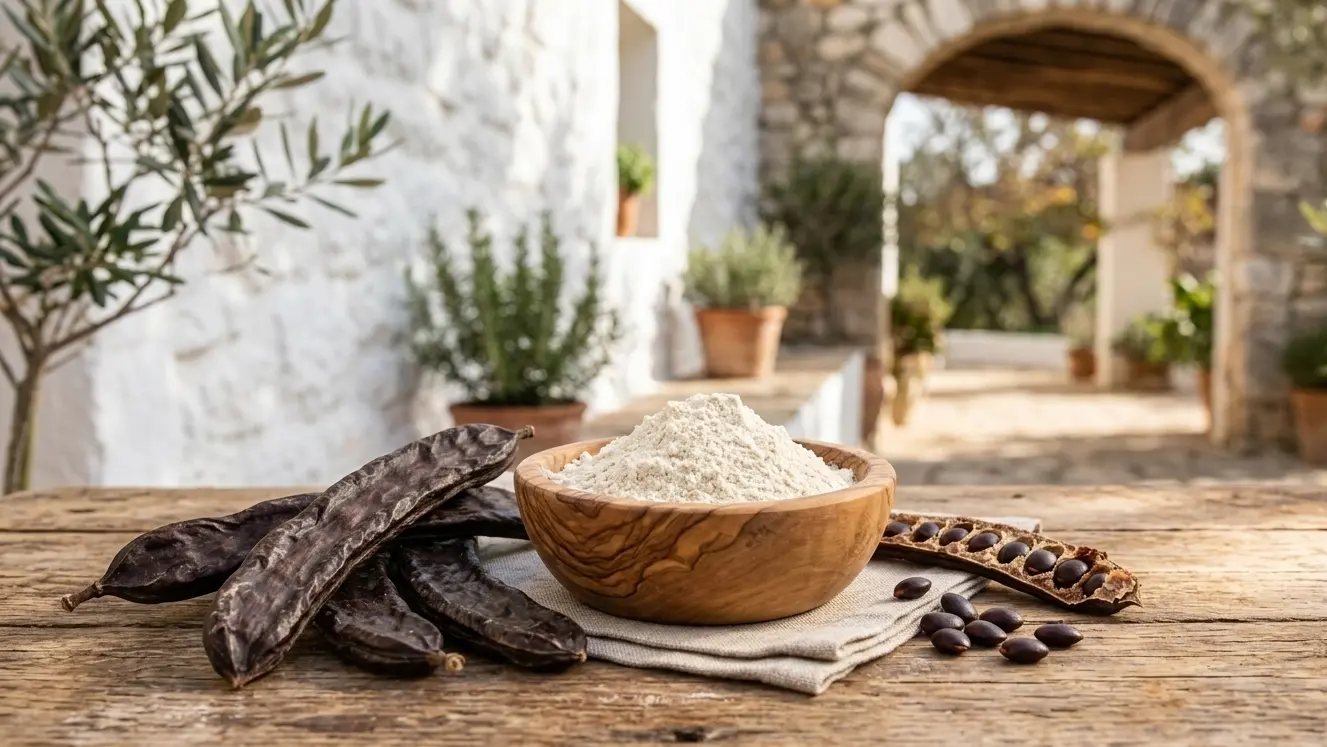
To truly answer the question of what is locust bean gum, we must look to the warm climates of the Mediterranean. Extracted directly from the endosperm of carob tree (Ceratonia siliqua) seeds, this natural ingredient is also widely known as carob gum or by its European additive number, E410. The extraction process transforms these hardy, resilient seeds into a highly versatile ingredient that food manufacturers and home cooks rely on globally.
When processed and milled, it typically appears as a fine, white to off-white substance. Depending on the supplier, you might see it labelled on shelves simply as locust bean powder or packaged as locust bean gum powder. Regardless of the exact name printed on the packet, it remains a highly effective natural galactomannan polysaccharide. The food industry prizes it because it acts as a clean-label, vegan-friendly additive that enhances texture without introducing artificial chemicals.
Understanding the Chemical Profile
The science behind this natural ingredient is fascinating. It boasts a notably high molecular weight, ranging from 0.3 to 2.0 million Daltons. The chemical structure consists of a robust mannose backbone paired with galactose side chains arranged in a precise 4:1 ratio. This specific structural layout allows it to form highly effective hydrocolloids when mixed with liquids.
However, it does not dissolve instantly when dropped into cold water. To fully activate its thickening properties, you must hydrate it in hot water, typically reaching temperatures between 80°C and 90°C. Once fully hydrated, even a tiny 1% concentration yields an impressive viscosity ranging from 2,000 to 3,500 cps.
While it is fully dispersible in water with a pH of 5.4 to 7.0 and remains entirely neutral-tasting, it strictly requires heat for complete solubility. Interestingly, it does not form a standing gel entirely on its own. Instead, its exceptionally high water-binding capacity makes it incredibly useful for managing moisture levels in complex recipes.
Brilliant Food Applications
Consumers frequently ask, what is locust bean gum doing in my weekly groceries? The answer lies in its exceptional ability to act as a potent thickener, stabiliser, texture modifier, and syneresis preventer. Syneresis is the technical term for the unwanted separation of liquid from a gel structure, such as the watery pool you sometimes notice resting on top of yogurt.
In commercial ice cream production, it performs brilliantly by actively controlling the formation of sharp ice crystals. This chemical intervention ensures a beautifully smooth texture and dramatically improves the dessert’s meltdown resistance. You will also find it actively enhancing the mouthfeel of salad dressings, savoury sauces, and various commercial baked goods.
Furthermore, it creates remarkable scientific synergies when combined with other natural hydrocolloids like kappa-carrageenan, xanthan gum, or agar. Together, these ingredients form stronger, highly elastic gels. This specific combination delivers a luxuriously creamy mouthfeel in dairy products, plant-based milks, and processed cheeses. For manufacturers aiming to maintain a strictly natural supply chain, sourcing organic locust bean gum offers an excellent way to meet growing consumer demand for premium, chemical-free ingredients.
Nutritional Powerhouse and Dietary Fibre
You might naturally assume that a commercial thickening agent provides zero nutritional value to the consumer. However, evaluating the precise nutritional profile reveals a completely different story. So, from a health perspective, what is locust bean gum offering your body? Primarily, it serves as an outstanding source of highly beneficial soluble dietary fibre.
A standard 100g serving contains very minimal fat (0.5 to 1.1g) and modest protein (5 to 7g), alongside low calories (193 to 353 kcal) and almost zero sugars (under 0.5g). Instead, carbohydrates entirely dominate its molecular makeup, providing roughly 77 to 80g per 100g. Crucially, almost all of these carbohydrates come in the form of non-digestible dietary fibre.
This exceptional fibre content equates to over 200% of your daily recommended value per 100g. Even in typical, very small food servings—such as a 2g portion—it delivers a meaningful 10% daily value fibre boost. Inside the digestive system, this soluble fibre forms soft, soothing gels. This internal process aids overall digestion, softens stool, and can even help naturally bind cholesterol. For consumers managing severe dietary restrictions or coeliac disease, securing a locust bean gum gluten free option is incredibly simple, as the carob seed naturally contains absolutely no gluten proteins.
Beyond the Kitchen: Other Incredible Uses
The utility of this naturally occurring galactomannan polysaccharide extends far beyond human food consumption. When examining what is locust bean gum used for in other global industries, the list grows surprisingly diverse and highly technical.
In the global pharmaceutical sector, it functions as a highly effective, natural binder for producing medical tablets. The cosmetics industry heavily utilises it to seamlessly stabilise complex emulsions in premium lotions and skin creams, ensuring these products maintain a consistent, luxurious texture over time. You will also find it thoroughly integrated into high-quality pet foods, providing the exact same texture-enhancing and digestive benefits it offers in human meals.
Industrial applications rely on it heavily as well. It plays a pivotal role in complex oil drilling operations and large-scale paper manufacturing, demonstrating its remarkable industrial versatility. Whether a procurement manager purchases standard locust bean powder for a massive manufacturing plant or a boutique skincare brand sources finely milled organic locust bean gum for artisanal cosmetics, the core chemical properties remain consistently reliable. Pure locust bean gum powder truly serves as a multi-purpose, foundational ingredient across countless global supply chains.
Conclusion
Understanding the science, origins, and utility behind our everyday ingredients empowers us to make far better purchasing choices. We have thoroughly explored the central question: what is locust bean gum and exactly how does it function on a chemical level? From its ancient origins within Mediterranean carob trees to its modern role as a clean-label, vegan fibre source, this natural plant thickener proves entirely indispensable to modern manufacturing.
Its unique ability to flawlessly stabilise ice cream, naturally boost gut health, and support complex pharmaceutical manufacturing highlights its incredible global value. The next time you enjoy a perfectly smooth dairy-free milk or a rich, creamy dessert sauce, you will know exactly which remarkable plant extract to thank for that flawless, satisfying texture.

Related Posts

Prickly Pear Seed Oil Guide
Prickly pear seed oil has become a standout in the world of natural skincare and wellness, celebrate

Is Olive Oil Good for Dogs or Cats?
As a pet owner, you are always looking for ways to support your furry friend’s health and happ

How to make date syrup
In the quest for healthier, more natural alternatives to refined sugar, many of us find ourselves st
 EN
EN  FR
FR  ES
ES  DE
DE  IT
IT