
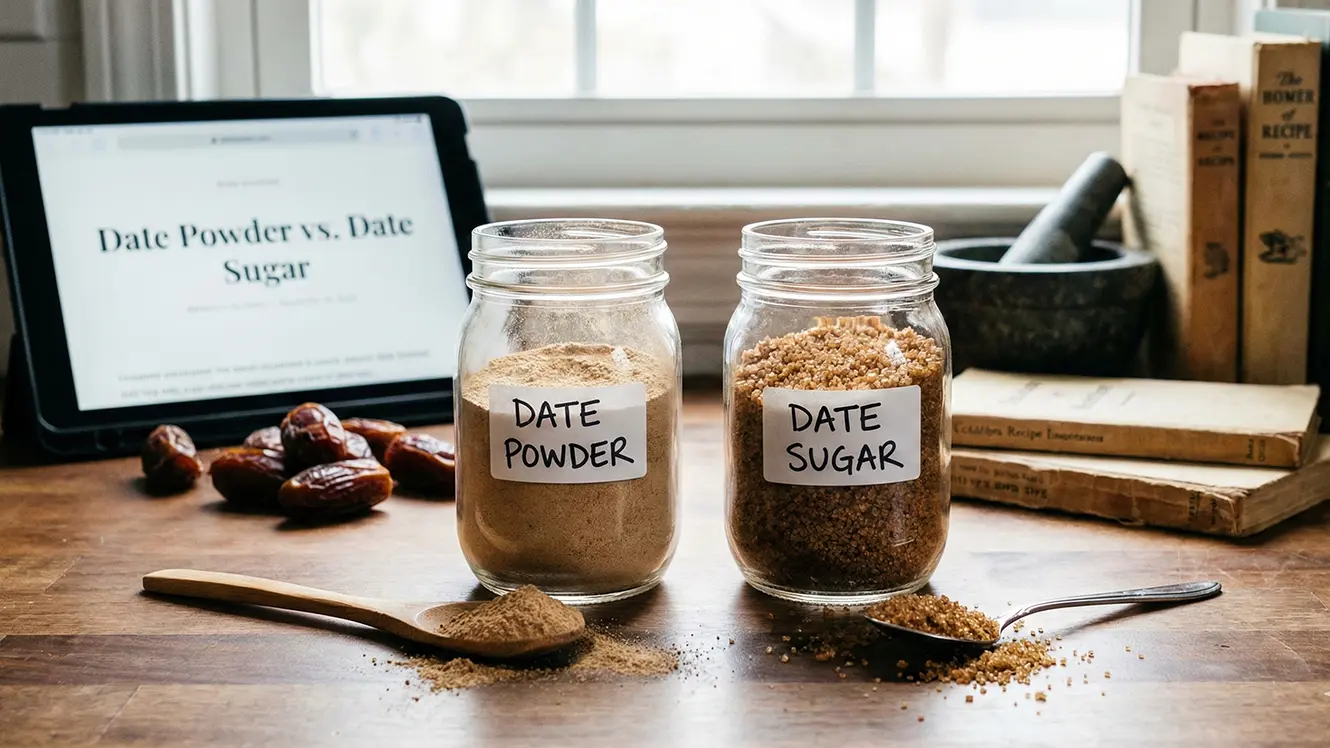
Date Powder vs Date Sugar
In the world of natural sweeteners, the distinction between different ingredients can be subtle yet critical. As consumers increasingly seek products with cleaner labels and fewer processed sugars, manufacturers are exploring fruit-based alternatives. Among the most popular are sweeteners derived from dates, but this brings up a common question for product developers: what is the difference between date powder and date sugar?
Although they originate from the same fruit, their functional properties diverge significantly, impacting everything from texture to marketing claims. For B2B buyers, importers, and private label brands, understanding the key points in the date powder vs date sugar debate is essential for successful product formulation. This guide will break down the technical, nutritional, and market distinctions to help you make the best choice for your brand.
What is Date Powder and Date Sugar?
To understand the difference, we first need to answer the question: what is date powder? Both date powder and date sugar are made from whole, pitted dates that are dried and ground into fine particles. Unlike date syrup, which is a liquid extract that filters out solids, both powder and sugar retain the whole fruit’s natural fibre, minerals, and valuable polyphenols.
The Production Process
The primary difference between the two lies in the milling process and the resulting particle size.
Date Powder is ground into an exceptionally fine consistency, similar to flour or cocoa powder. This is achieved using specialised milling equipment that prevents the fruit’s natural sugars from clumping, resulting in a free-flowing powder that integrates well into dry mixtures. Brands seeking an even cleaner label often opt for organic date powder, which guarantees the dates were grown without synthetic pesticides or fertilisers.
Date Sugar, on the other hand, consists of coarser granules. The name is somewhat of a misnomer, as it is not a crystallised sugar like sucrose. Instead, it is simply ground dates, with a texture designed to mimic traditional granulated sugar. It is often marketed as a direct 1:1 replacement for brown or white sugar in baking.
Nutrition and Glycemic Impact: The Clean Label Edge
The nutritional profile of sweeteners is a major selling point for health-conscious consumers. This is where date-based ingredients truly stand out against refined alternatives. Because they are made from the entire fruit, they carry a nutritional profile that “empty calorie” sweeteners lack.
Fibre and Mineral Content
One of the most significant advantages is fibre. While refined white sugar contains zero fibre, both date powder and date sugar typically offer around 7–8 grams of dietary fibre per 100 grams. This insoluble fibre supports digestive health and plays a vital role in moderating sugar absorption.
Furthermore, dates are a natural source of key micronutrients. A serving of date powder or sugar delivers meaningful amounts of:
- Potassium: Essential for heart health and electrolyte balance.
- Magnesium: Crucial for muscle function and energy.
- Calcium and Iron: Important for bone health and oxygen transport.
- Antioxidants: Rich in polyphenols that help combat oxidative stress.
Glycemic Index GI and Blood Sugar
The Glycemic Index GI measures how quickly a food raises blood glucose levels. The date powder glycemic index is a key factor for its appeal.
- Refined White Sugar: High GI (around 65–100).
- Date Sugar/Powder: Low to Moderate GI (typically 42–55).
The fibre content slows digestion, resulting in a more gradual rise in blood sugar instead of a sharp spike. This makes date-based sweeteners a superior choice for products targeting sustained energy or a “better-for-you” market position.
Functional Differences in Formulations
While nutrition attracts consumers, functionality is what matters most to R&D teams. Here, the date powder vs date sugar comparison becomes critical.
Texture and Solubility
Neither ingredient dissolves completely in water due to their fibrous content. They will leave sediment in clear liquids.
- Date Powder: Its fine, flour-like consistency makes it an excellent bulking agent in dry mixes like protein powders. It absorbs moisture, which can increase viscosity in wet applications, but its fine particles are less likely to create a gritty mouthfeel.
- Date Sugar: The coarser granules are great for adding a crunch to toppings but can be noticeable in smooth batters or creams. It does not melt like sucrose but rather softens as it hydrates.
Flavour Profile
Both ingredients provide a complex, warm flavour with notes of caramel, toffee, and molasses. This adds a depth that neutral white sugar cannot. Formulators must consider this distinct flavour, as it pairs well with chocolate, nuts, and spices but may overpower more delicate profiles.
Ideal Applications
The final verdict on date powder vs date sugar often comes down to the end product.
Date Powder is best for:
- Dry Blends: Protein powders, meal replacement shakes, and infant formulas.
- Smooth Products: Energy gels, smooth fillings, and pureed baby foods.
- Binding: An effective binder in snack bars and granola.
Date Sugar is best for:
- Baking: A direct replacement for brown sugar in cookies, cakes, and muffins.
- Toppings: Sprinkled over porridge or yoghurt for added texture.
- Retail Packs: Sold directly to consumers as a home baking alternative.
Market Trends and Growth Potential
The global movement towards natural, plant-based foods is fuelling impressive growth in the date market. The date sugar market alone is projected to grow from USD 425 million in 2025 to nearly USD 580 million by 2030, with a CAGR of over 6%.
The Popularity of Powdered Formats
Interestingly, powdered forms account for roughly 46% of date sugar revenue, driven largely by industrial demand from manufacturers who value its versatility in large-scale production.
Key Demand Drivers
- Clean Labels: “Date powder” is a simple, trustworthy ingredient that resonates with consumers.
- Plant-Based and Vegan: As 100% plant-derived, these sweeteners are ideal for the booming vegan market.
- No Refined Sugar Claims: Brands can market products as “Sweetened Only with Fruit,” a powerful claim.
Health and Positioning for Your Brand
Choosing a date-based sweetener is a strategic marketing decision. Using organic date powder, for example, signals a commitment to premium, natural ingredients that can justify a higher price point.
Nutrient Density vs “Empty” Calories
You can market products as containing “whole food nutrition.” A tablespoon of date sugar offers more antioxidants than an equivalent amount of honey or maple syrup.
Regulatory and Labelling Nuances
In some regions, date powder can be listed as “Date Fruit” on an ingredient panel, allowing brands to avoid using the word “sugar” altogether. This “fruit sweetener” halo is highly valuable, especially in the baby food and wellness snack categories.
Conclusion: Which is Right for Your Business?
The choice in the date powder vs date sugar debate depends entirely on your application and target market.
If you are a manufacturer of protein blends, infant food, or smooth energy bars, date powder is the clear winner. Its fine texture ensures seamless integration and supports high-performance marketing claims.
If you are a bakery brand or a retailer aiming to offer a direct sugar replacement, date sugar is the perfect choice. Its granulated form mimics the consumer experience of baking with traditional sugar, making it an easy and appealing swap.
Both ingredients provide a fantastic opportunity to tap into the “better-for-you” trend. They are sustainable, minimally processed, and nutrient-dense qualities that modern consumers actively seek. By selecting the right format, you can position your brand at the forefront of the natural food revolution.


Related Posts

How to make date syrup
In the quest for healthier, more natural alternatives to refined sugar, many of us find ourselves st

Is Olive Oil Good for Dogs or Cats?
As a pet owner, you are always looking for ways to support your furry friend’s health and happ
5 Reasons Why Date Seed Oil Is the Next Big Anti-Aging Ingredient
In the ever-evolving world of natural beauty, a truly remarkable ingredient is emerging from the hea
 EN
EN  FR
FR  ES
ES  DE
DE  IT
IT