
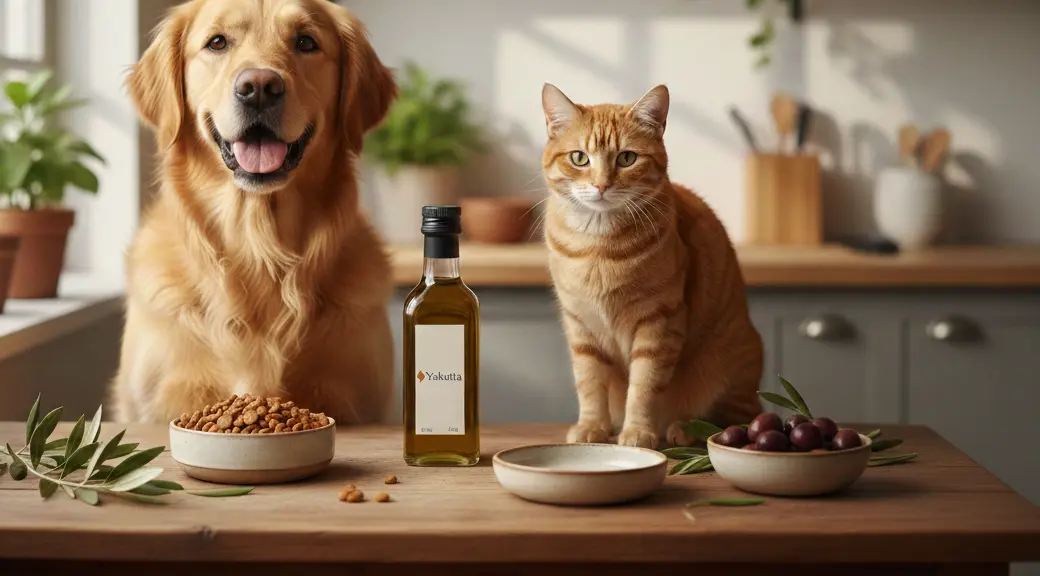
L'huile d'olive est-elle bonne pour les chiens et les chats ?
En tant que propriétaire d'un animal de compagnie, vous êtes toujours à la recherche de moyens pour favoriser la santé et le bonheur de votre compagnon à quatre pattes. Vous avez peut-être rencontré des conseils suggérant qu'une petite quantité d'huile d'olive peut être un complément bénéfique à leur régime alimentaire. Mais l'huile d'olive est-elle bonne pour les chiens et les chats ? Bien que cet aliment de base soit réputé pour ses bienfaits sur la santé humaine, il convient d'examiner attentivement la question de savoir si l'huile d'olive pour les animaux de compagnie est vraiment sans danger.
La réponse courte est oui, l'huile d'olive extra vierge - que l'on trouve souvent auprès des fournisseurs d'huile d'olive en vrac ou de l'huile d'olive extra vierge en gros - est généralement sans danger pour de nombreux chiens et chats adultes en bonne santé, en petites quantités approuvées par les vétérinaires. Elle contient des graisses mono-insaturées, des antioxydants et de la vitamine E qui peuvent présenter certains avantages. Cependant, les chats peuvent-ils consommer de l'huile d'olive en toute sécurité comme les chiens ? Et tous les chiens et chats peuvent-ils recevoir ce supplément ? Il ne s'agit pas d'un ajout sans risque, et il ne doit jamais remplacer un régime alimentaire équilibré et adapté à l'espèce. Ce guide vous présente les avantages, les risques et les conseils pratiques liés à l'utilisation de l'huile d'olive pour les animaux de compagnie. Il aborde notamment la question de savoir si les chats ou les chiens peuvent être allergiques à l'huile d'olive ou si les chats peuvent consommer de l'huile d'olive extra vierge en particulier.
Les bienfaits de l'huile d'olive pour les chiens
L'huile d'olive est-elle bonne pour les chiens ? Lorsqu'elle est utilisée correctement, l'huile d'olive extra vierge (EVOO) peut être un complément utile pour votre chien. Ses composés naturels peuvent contribuer à divers aspects de son bien-être.
Amélioration de la santé de la peau et du pelage
L'un des avantages les plus visibles est l'amélioration de la peau et du pelage de votre chien. Les graisses mono-insaturées et la vitamine E contenues dans l'huile d'olive peuvent aider à hydrater la peau de l'intérieur, réduisant ainsi la sécheresse et la desquamation. Il en résulte souvent un pelage plus brillant et d'apparence plus saine.
Soutien anti-inflammatoire
L'EVOO est riche en acide oléique et en antioxydants appelés polyphénols. Ces composants ont des propriétés anti-inflammatoires qui peuvent contribuer à réduire les inflammations de faible intensité dans l'organisme. Pour les chiens âgés, cela pourrait contribuer au confort des articulations dans le cadre d'un mode de vie plus sain.
Soutien digestif
Pour les chiens souffrant de constipation légère, une petite quantité d'huile d'olive peut agir comme un lubrifiant naturel pour le tube digestif, facilitant ainsi l'évacuation des selles. Il s'agit d'une méthode douce pour soulager l'animal, mais elle ne doit pas être utilisée comme solution à long terme pour les problèmes digestifs chroniques.
Risques et considérations pour les chiens
Avant de saisir la bouteille, il est essentiel de comprendre les inconvénients potentiels. L'huile d'olive ne convient pas à tous les chiens et une utilisation excessive peut entraîner des problèmes de santé importants. Certains propriétaires d'animaux se demandent si les chiens sont allergiques à l'huile d'olive. Les allergies alimentaires chez les chiens sont rares avec l'huile d'olive, mais tout nouvel ajout doit être surveillé de près pour détecter des symptômes tels que des démangeaisons ou des troubles digestifs.
Teneur élevée en calories et prise de poids
L'huile d'olive est très riche en calories, une seule cuillère à café contenant environ 40 calories. Si elle est donnée régulièrement sans que la ration alimentaire globale de votre chien soit adaptée, elle peut facilement entraîner une prise de poids. L'obésité chez les chiens peut contribuer à des problèmes graves tels que le diabète et un stress accru sur leurs articulations.
Risque de pancréatite
La teneur élevée en matières grasses de l'huile d'olive peut déclencher une pancréatite, une inflammation douloureuse et potentiellement mortelle du pancréas. Les chiens ayant des antécédents de pancréatite ou appartenant à des races prédisposées à cette affection ne doivent pas recevoir de graisses supplémentaires, y compris de l'huile d'olive, sans l'accord d'un vétérinaire.
Troubles gastro-intestinaux
Une trop grande quantité d'huile d'olive en une seule fois peut surcharger le système digestif d'un chien, entraînant des symptômes tels que diarrhée, vomissements ou selles graisseuses. La tolérance de chaque chien est différente, c'est pourquoi il est important de commencer par une quantité minime.
Guide pratique de l'utilisation de l'huile d'olive pour les chiens
Si vous et votre vétérinaire décidez que l'huile d'olive est un complément adapté à votre chien, suivez les conseils suivants :
- Choisissez une huile d'olive de haute qualité : Utilisez toujours de l'huile d'olive extra vierge, idéalement obtenue auprès de fournisseurs d'huile d'olive en vrac ou d'huile d'olive extra vierge en gros réputés, car c'est l'huile la moins transformée et celle qui contient le plus de composés bénéfiques.
- Commencer modestement : Introduisez-le lentement pour voir comment l'organisme de votre chien réagit.
- Respecter les consignes de dosage : La règle générale est d'environ une cuillère à café par 9 kg de poids corporel par jour, ou moins. Certains experts suggèrent un maximum de 0,5 ml par kg de poids corporel par jour. Mélangez cette quantité directement à la nourriture.
- Consultez d'abord votre vétérinaire : C'est l'étape la plus importante. Votre vétérinaire peut vous donner des conseils adaptés aux besoins spécifiques de votre chien en matière de santé.
Les bienfaits de l'huile d'olive pour les chats
Les chats peuvent-ils consommer de l'huile d'olive et, plus précisément, de l'huile d'olive extra vierge ? Bien que les chats soient des carnivores obligatoires ayant des besoins alimentaires différents de ceux des chiens, la réponse est que de petites quantités mesurées d'huile d'olive extra vierge peuvent parfois être utiles. Pour de nombreux chats adultes en bonne santé, de petites doses peuvent être bénéfiques.
Aide pour les boules de poils et la constipation
Pour les chats, le principal avantage de l'huile d'olive est sa capacité à lubrifier le tube digestif. Une très petite quantité d'huile d'olive peut aider les chats à évacuer plus facilement les boules de poils et peut soulager une constipation légère et occasionnelle. C'est pourquoi vous pouvez vous demander si un chat peut manger de l'huile d'olive en tant que remède maison sûr.
Soutien de la peau et du pelage
Comme pour les chiens, les graisses saines contenues dans l'huile d'olive peuvent contribuer à un pelage plus sain et plus brillant et à une meilleure fonction de barrière cutanée chez les chats. Cependant, les chats peuvent-ils consommer directement de l'huile d'olive extra vierge ? Seulement avec modération et dans le cadre d'un régime alimentaire équilibré.
Risques et considérations pour les chats
Les propriétaires d'animaux se demandent souvent si les chats sont allergiques à l'huile d'olive. Les réactions allergiques à l'huile d'olive chez les chats sont rares, mais des intolérances ou des sensibilités sont possibles, ce qui souligne l'importance de faire preuve de prudence et de modération. Si vous avez encore des doutes, demandez toujours : les chats peuvent-ils avoir de l'huile d'olive dans leur nourriture et en quelle quantité ?
Ce n'est pas un remède aux problèmes graves
Bien qu'il puisse aider à lutter contre la constipation occasionnelle, il ne doit jamais être utilisé pour traiter les cas chroniques ou graves. Une constipation régulière chez le chat peut être le symptôme d'une affection sous-jacente grave, comme un mégacôlon ou une obstruction, qui nécessite l'intervention immédiate d'un vétérinaire. L'utilisation d'huile peut masquer les symptômes et retarder le traitement approprié.
Charge en graisses et risques pour la santé
Les besoins caloriques quotidiens d'un chat sont très faibles. Même une toute petite quantité d'huile d'olive ajoute une quantité importante de graisses et de calories, ce qui peut entraîner une prise de poids ou des troubles gastro-intestinaux. Chez les chats sensibles, l'huile d'olive peut également contribuer à une pancréatite.
Préférences gustatives des félins
De nombreux chats sont très attachés à la texture et au goût de leur nourriture. L'ajout d'huile peut en rebuter certains et les amener à refuser leur repas. Un chat qui refuse de manger peut être dangereux, en particulier pour ceux qui sont sujets à la lipidose hépatique (maladie du foie gras).
Guide pratique de l'utilisation de l'huile d'olive pour les chats
Si vous envisagez d'offrir de l'huile d'olive aux chats de votre foyer, gardez ces conseils à l'esprit :
- Utiliser avec parcimonie : Il est conseillé de commencer par quelques gouttes et de ne pas dépasser ¼ de cuillère à café plusieurs fois par semaine. Il ne doit pas s'agir d'un supplément quotidien.
- Bien mélanger : Mélangez soigneusement la petite quantité à leur nourriture humide.
- A éviter chez certains chats : Les chatons, les chattes enceintes et les chats souffrant de maladies gastro-intestinales ou de pancréatite ne doivent pas recevoir d'huile d'olive, sauf avis contraire d'un vétérinaire.
Dernières réflexions et avis de non-responsabilité
L'huile d'olive est-elle sans danger pour les animaux de compagnie ? Pour de nombreux chiens adultes en bonne santé et certains chats, l'huile d'olive peut être un complément occasionnel sûr lorsqu'elle est utilisée en petites quantités mesurées. La question essentielle “L'huile d'olive est-elle bonne pour les chiens ?” se résume à la modération, tandis que des questions comme “Les chats peuvent-ils manger de l'huile d'olive extra vierge ?” et “Les chats peuvent-ils consommer de l'huile d'olive ?” nous rappellent que chaque animal de compagnie est unique. Les avantages possibles pour la peau, le pelage et les problèmes digestifs légers sont intéressants, mais les risques, tels que les rares cas d'allergie (les chiens sont-ils allergiques à l'huile d'olive ou les chats sont-ils allergiques à l'huile d'olive ?) ou de suralimentation, doivent toujours être pris en compte.
N'oubliez pas que l'huile d'olive est un ingrédient complémentaire, et non une panacée ou une source principale de graisse dans l'alimentation de votre animal. Que vous l'achetiez à l'épicerie ou que vous recherchiez de l'huile d'olive en vrac ou de l'huile d'olive extra vierge en gros, la qualité est importante.
Avis de non-responsabilité : Les informations contenues dans cet article sont fournies à des fins éducatives uniquement et ne remplacent pas l'avis d'un vétérinaire professionnel. Consultez toujours votre vétérinaire avant d'ajouter de l'huile d'olive ou tout autre nouveau supplément à l'alimentation de votre animal. Il peut vous aider à déterminer s'il s'agit d'un choix sûr et approprié pour votre chien ou votre chat.


 FR
FR  EN
EN  ES
ES  DE
DE  IT
IT