
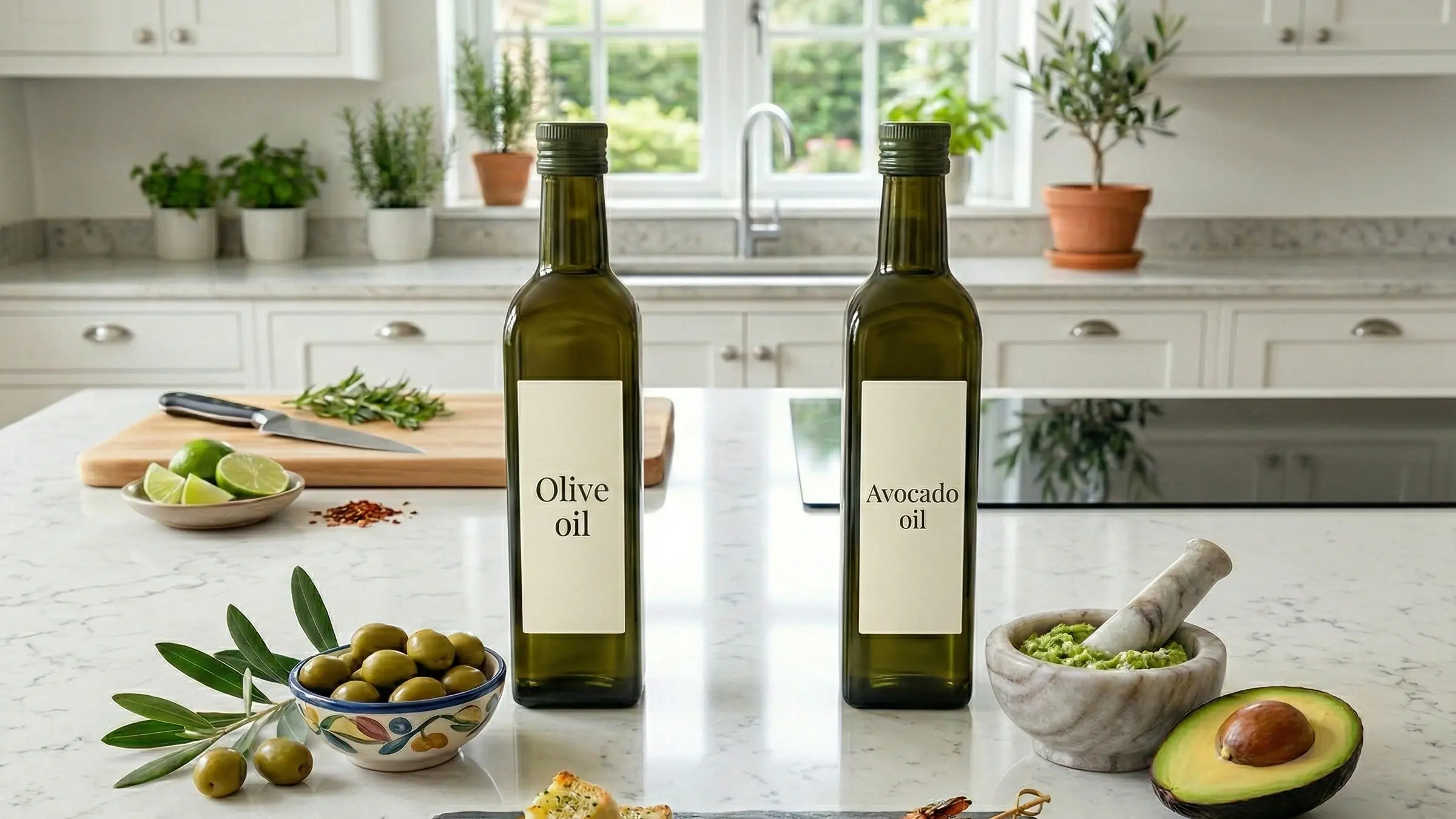
Olio di avocado vs olio d’oliva
Passeggiando nel reparto oli da cucina di qualsiasi supermercato, ti trovi immediatamente di fronte a una scelta vertiginosa. Da anni, il dibattito tra olio di avocado e olio d’oliva cattura l’attenzione dei consumatori attenti alla salute. Mentre l’olio d’oliva ha regnato sovrano come standard d’oro per decenni, negli ultimi anni è entrato in scena un nuovo sfidante: l’olio di avocado. Entrambi sono considerati superfood, ricchi di grassi salutari per il cuore e nutrienti essenziali, ma quando si parla di olio di avocado vs olio d’oliva, non sono esattamente intercambiabili.
Che tu sia un cuoco casalingo desideroso di perfezionare la tecnica di rosolatura o un appassionato di salute che vuole ottimizzare l’assunzione di nutrienti, comprendere le differenze tra olio di avocado vs olio d’oliva è fondamentale. In questa guida, analizziamo i profili nutrizionali, i punti di fumo, i benefici per la salute e i costi di olio di avocado vs olio d’oliva. Alla fine, saprai esattamente quale bottiglia scegliere.
Analisi nutrizionale
A prima vista, questi due oli sembrano notevolmente simili dal punto di vista nutrizionale. Entrambi sono apprezzati per il loro alto contenuto di grassi monoinsaturi, i “grassi buoni” noti per sostenere la salute del cuore. Tuttavia, un’analisi più approfondita dei dati rivela alcune differenze sottili ma importanti.
Ecco un confronto nutrizionale diretto basato su una porzione standard di un cucchiaio (cucchiaio da tavola):
Nutriente | Olio d’oliva (1 cucchiaio) | Olio di avocado (1 cucchiaio) |
|---|---|---|
Calorie | 119 | 124 |
Grassi totali | 13,5 g | 14 g |
Acidi grassi saturi | 1,86 g | 1,62 g |
Acidi grassi monoinsaturi | 9,86 g | 9,88 g |
Acidi grassi polinsaturi | 1,42 g | 1,89 g |
Ferro | 0,076 mg (mcg) | 0 mg |
Vitamina E (alfa-tocoferolo) | 1,94 mg | 0 mg |
Vitamina K | 8,13 mcg | 0 mcg |
Analisi del contenuto vitaminico
La differenza più evidente riguarda il contenuto vitaminico. L’olio d’oliva è il chiaro vincitore in questo caso. Un solo cucchiaio fornisce una buona quantità di vitamina E, un potente antiossidante che protegge le cellule dai danni, e vitamina K, essenziale per la coagulazione del sangue e la salute delle ossa.
L’olio di avocado, pur essendo ricco di grassi salutari, non contiene queste vitamine specifiche in quantità significative. Tuttavia, la nutrizione raramente riguarda un singolo numero; conta come questi componenti lavorano insieme all’interno della tua dieta.
Punto di fumo e usi culinari: olio di avocado vs olio d’oliva
Sebbene la nutrizione sia fondamentale, spesso è la funzionalità a determinare quale olio scegliere dalla dispensa. Il “punto di fumo” è la temperatura alla quale un olio smette di brillare e inizia a fumare. Quando un olio supera il suo punto di fumo, non solo rovina il sapore del cibo, ma può anche degradare i nutrienti e rilasciare radicali liberi dannosi.
Olio di avocado: l’eroe delle alte temperature
Se ami la cottura ad alte temperature, l’olio di avocado dovrebbe essere la tua scelta principale. Vanta un punto di fumo incredibilmente alto fino a 520°F (271°C). Questo lo rende eccezionalmente stabile e adatto per:
- Rosolare le bistecche: Puoi ottenere una crosta perfetta senza far scattare l’allarme antincendio.
- Saltare in padella: Sopporta senza sforzo il calore intenso di un wok.
- Frittura profonda: Mantiene la stabilità anche durante sessioni di frittura prolungate.
- Arrostire le verdure: Consente una cottura ad alta temperatura per ottenere la caramellizzazione.
Olio d’oliva: l’esaltatore di sapore
L’olio d’oliva, in particolare l’olio extra vergine di oliva (EVOO), ha un punto di fumo più moderato che varia tra 325°F e 410°F (163°C – 210°C), a seconda del grado di raffinazione e della qualità. Sebbene si possa certamente cucinare con esso, è più indicato per preparazioni a temperatura media, dove il suo sapore distintivo può risaltare.
- Soffriggere: Perfetto per rosolare cipolle, aglio e basi di verdure.
- Condimenti per insalate: Le sue note ricche e piccanti sono impareggiabili nelle vinaigrette.
- Olio finale: Un filo su pasta, hummus o zuppa aggiunge profondità e ricchezza.
- Cottura al forno: Funziona magnificamente in torte e pani che non richiedono temperature del forno estremamente elevate.
Il verdetto: Tieni l’olio di avocado vicino al fornello per friggere e rosolare, e conserva il tuo olio d’oliva di alta qualità sul tavolo per rifinire e condire.
Approfondimento sui benefici per la salute
Entrambi gli oli sono campioni della salute del cuore, principalmente grazie al loro alto contenuto di grassi monoinsaturi. Questi grassi aiutano a ridurre il colesterolo LDL (cattivo) e a diminuire il rischio di malattie cardiache. Inoltre, entrambi gli oli contengono antiossidanti che combattono lo stress ossidativo nel corpo. Tuttavia, ciascuno ha i propri “superpoteri”.
Olio d’oliva: la centrale dei polifenoli
L’olio d’oliva è la pietra angolare della dieta mediterranea, una delle diete più studiate e raccomandate a livello mondiale. La sua principale fama deriva dall’elevata concentrazione di polifenoli.bn
- Oleocantale: Questo polifenolo specifico imita gli effetti antinfiammatori dell’ibuprofene. È un modo naturale per ridurre l’infiammazione cronica nel corpo.
- Prevenzione delle malattie: Studi che collegano la dieta mediterranea alla longevità suggeriscono che il consumo costante di olio d’oliva può ridurre fino al 30% il rischio di malattie cardiovascolari. È stato inoltre associato a un rischio ridotto di demenza e di alcuni tipi di cancro.
Olio di avocado vs olio d’oliva per la pelle:
Olio di avocado come protettore della pelle e degli occhi
Sebbene possa mancare di vitamina E, l’olio di avocado apporta altri composti benefici.
- Luteina: Si tratta di un antiossidante naturalmente presente negli occhi. Assumere luteina supporta la salute oculare a lungo termine e può aiutare a proteggere la pelle dai danni dei raggi UV.
- Fitosteroli: L’olio di avocado contiene una concentrazione maggiore di fitosteroli rispetto all’olio d’oliva. Questi composti vegetali competono con il colesterolo per l’assorbimento nel sistema digestivo, aiutando potenzialmente a gestire i livelli di colesterolo in modo più efficace.
- Assorbimento dei nutrienti: È interessante notare che aggiungere olio di avocado alle insalate (proprio come mangiare avocado fresco) può aumentare significativamente la capacità del corpo di assorbire le vitamine liposolubili (A, D, E e K) dalle verdure che si consumano.
Benefici dell’olio d’oliva per la pelle
L’olio d’oliva è un vero e proprio alleato naturale per ottenere un incarnato sano e luminoso. Ricco di antiossidanti e proprietà idratanti, idrata efficacemente la pelle, combatte lo stress ossidativo e aiuta a mantenere una texture morbida e elastica. La sua delicatezza lo rende adatto a diversi tipi di pelle ed estremamente versatile. Puoi usarlo come idratante nutriente, struccante delicato o come ingrediente chiave in maschere e detergenti fai-da-te, rendendolo un eccellente complemento per qualsiasi routine di cura della pelle.
Costo e realtà della produzione
Per molte aziende e famiglie, la decisione dipende spesso dal prezzo. Qui, la differenza è evidente.
L’olio di avocado costa generalmente dal 30 al 40 % in più rispetto all’olio d’oliva.
Perché l’olio di avocado è più costoso?
- Resa: Per produrre un litro di olio di avocado rispetto all’olio d’oliva è necessario un volume di frutta significativamente maggiore.
- Geografia: Gli avocado hanno regioni di coltivazione più limitate (principalmente Messico, alcune parti del Sud America e California/Nuova Zelanda) rispetto alle vaste coltivazioni di ulivi del Mediterraneo e oltre.
- Dinamiche di mercato: La domanda globale di avocado fresco spesso fa aumentare il prezzo della materia prima utilizzata per l’olio.
Per mettere questo in prospettiva:
- Una bottiglia da 750 ml di olio di avocado di qualità costa generalmente tra 15 e 20 $.
- Una bottiglia simile di olio d’oliva di solito costa tra 10 e 15 $.
- Per oncia, si spendono circa 0,50 $+ per l’olio di avocado contro 0,30–0,44 $ per l’olio d’oliva.
Il vantaggio dell’acquisto all’ingrosso
Per i produttori alimentari, i ristoranti o anche le famiglie numerose, questi costi si accumulano rapidamente. È qui che diventa essenziale un approvvigionamento strategico. L’acquisto all’ingrosso può ridurre significativamente il divario di prezzo. I fornitori all’ingrosso spesso offrono tariffe competitive che rendono l’olio di avocado un’opzione praticabile per le cucine commerciali che necessitano di un olio stabile ad alte temperature, mentre l’olio d’oliva rimane il campione conveniente per la cottura e il condimento generale.
Conclusione: Quale dovresti scegliere?
Non c’è un vincitore unico nel confronto tra olio di avocado e olio d’oliva, perché i due oli servono a scopi diversi. Considerando olio di avocado vs olio d’oliva, è chiaro che sono complementari piuttosto che in competizione.
Se la tua priorità è cucinare ad alte temperature (friggere, grigliare o arrostire a temperature elevate), i vantaggi nel confronto olio di avocado vs olio d’oliva sono chiari: l’olio di avocado vale l’investimento extra. Esaminando olio di avocado vs olio d’oliva per applicazioni ad alta temperatura, il suo sapore neutro e l’incredibile stabilità al calore lo rendono indispensabile per cuochi esperti.
Se la tua priorità è il sapore, le applicazioni a crudo e il massimo contenuto di antiossidanti, il dibattito olio di avocado vs olio d’oliva pende a favore dell’olio extra vergine di oliva, che rimane il re indiscusso. Nel confronto olio di avocado vs olio d’oliva per densità nutrizionale, l’olio d’oliva offre un solido profilo vitaminico e i potenti benefici antinfiammatori dell’oleocantale a un prezzo più accessibile.
Per una cucina davvero ben fornita, la migliore strategia nel dibattito olio di avocado vs olio d’oliva è avere entrambi a disposizione. Quando consideri olio di avocado vs olio d’oliva per varie ricette, usa l’olio di avocado quando la cottura richiede alte temperature e l’olio d’oliva quando vuoi aggiungere ricchezza, nutrienti e sapore al tuo piatto finito.

 IT
IT  EN
EN  FR
FR  ES
ES  DE
DE