
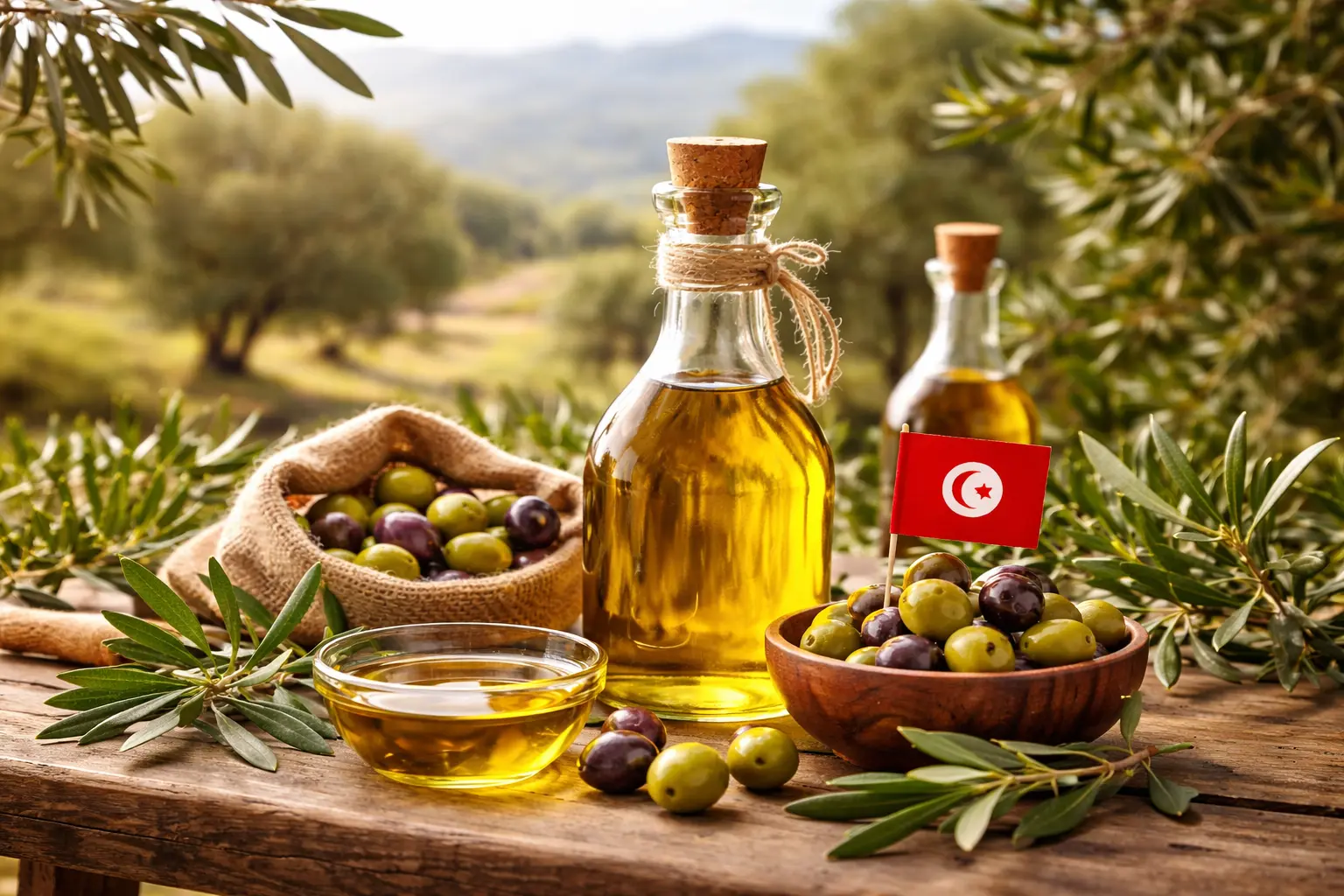
Aceite de Oliva Tunecino: Herencia, Beneficios y Excelencia Global
Cuando las marcas alimentarias internacionales y los compradores buscan aceites comestibles de alta calidad, su búsqueda cada vez se dirige más hacia el norte de África. El aceite de oliva tunecino destaca a nivel mundial por su calidad excepcional, sus ricos perfiles de sabor y sus métodos de producción sostenibles. Como uno de los principales productores mundiales, Túnez ofrece una propuesta atractiva para las empresas que buscan asegurar un producto confiable y de alta calidad.
Para grandes empresas y distribuidores, es fundamental entender qué hace que esta región sea única. Esta guía explora la herencia agrícola, las variedades distintas y las ventajas comerciales de abastecerse de aceite de oliva tunecino. Ya sea que necesite suministro a granel o un producto embotellado premium, descubrir la excelencia de este gigante mediterráneo transformará su estrategia de aprovisionamiento.
La historia del aceite de oliva tunecino
El cultivo de olivos en Túnez se remonta a más de 3.000 años, lo que lo convierte en una de las tradiciones agrícolas más antiguas y continuas del Mediterráneo. Los antiguos comerciantes fenicios fueron los primeros en introducir los olivos en la región, creando una base para una próspera producción de aceite de oliva. Más tarde, el Imperio Romano amplió extensamente estos olivares, convirtiendo el norte de África en un importante proveedor de aceite de oliva para Europa y el Mediterráneo en general.
Hoy en día, este rico patrimonio sigue profundamente arraigado en la cultura del país. El cultivo del olivo no es solo una actividad económica; es un símbolo de la identidad tunecina. Generaciones de agricultores mantienen prácticas tradicionales, haciendo hincapié en un cultivo, una recolección y un prensado cuidadosos. Desde las comidas familiares diarias hasta las tradiciones culinarias festivas, el aceite de oliva es una parte integral del estilo de vida tunecino.
Dato: Túnez alberga más de 82 millones de olivos, lo que lo convierte en el cuarto mayor productor de aceite de oliva del mundo. El país produce aproximadamente 320.000 a 400.000 toneladas de aceite de oliva al año, representando cerca del 10 % de la producción mundial.
Principales variedades de aceite de oliva tunecino
For international buyers, the diversity of Aceite de oliva tunecino Para los compradores internacionales, la diversidad del aceite de oliva tunecino representa una ventaja significativa. El país produce varias variedades distintas, cada una moldeada por el terruño, el clima y las condiciones del suelo locales.
- Chemlali: Cultivada predominantemente en el centro y sur de Túnez, la variedad Chemlali produce un aceite suave, ligero y equilibrado. Su delicada fruta lo hace ideal para mezclas o productos que requieren un perfil de sabor más suave. Esta variedad representa más del 60 % de la producción total de aceite de oliva de Túnez.
- Chetoui : Principalement cultivée dans le nord de la Tunisie, la variété Chetoui est réputée pour sa saveur robuste et poivrée ainsi que pour sa teneur élevée en polyphénols. Cela la rend particulièrement attractive pour les marques soucieuses de la santé recherchant des huiles riches en antioxydants. La Chetoui représente environ 20 % de la production nationale et est très prisée pour les produits premium issus d’une seule origine.
- Otras variedades: Túnez también cultiva aceitunas menos comunes como Sigoise, Zalmati y Oueslati, que se utilizan cada vez más en aceites boutique y mezclas especiales.
Insight: La variedad y la diferenciación regional permiten a los fabricantes seleccionar aceites adaptados a aplicaciones específicas, desde aceites culinarios suaves para la producción alimentaria a gran escala hasta aceites intensos de acabado para mercados gourmet.
Principales regiones productoras de olivo en Túnez
La geografía desempeña un papel fundamental en la definición del producto final. Las diversas zonas climáticas de Túnez crean entornos de cultivo distintos que afectan directamente el sabor y la calidad de la cosecha.
- Zaghouan y Béja: Situadas en el norte, estas áreas experimentan mayores precipitaciones y temperaturas más frescas. Este entorno es ideal para el olivo Chetoui, dando lugar a aceites robustos con un carácter fuerte y complejo.
- Zaghouan and Béja: Situated in the north, these areas experience higher rainfall and cooler temperatures. This environment perfectly suits the Chetoui olive, resulting in robust oils with a strong, complex character.
- Other Notable Regions:
- Kairouan, Sousse, and Nabeul produce a mix of Chemlali and specialty cultivars
- Mountainous areas provide unique terroir for small-batch premium oils
El marcado contraste entre el norte y el sur permite a Túnez ofrecer un portafolio altamente diversificado en el mercado global.
Sustainable Production Practices
Tunisia is a global pioneer in sustainable olive cultivation. The arid climate naturally resists many pests, reducing the need for chemical treatments. Many farms employ organic or integrated farming practices, producing certified organic extra virgin olive oil with minimal environmental impact.
- Harvesting: Most olives are still hand-picked, preventing bruising and preserving delicate flavours.
- Cold Pressing: Modern mills use temperature-controlled cold pressing to retain aroma, flavour, and nutritional integrity.
- Storage: Oils are stored in stainless steel, nitrogen-flushed tanks to prevent oxidation.
Sustainability Stats: Tunisia has over 250,000 hectares of organically farmed olive groves, making it the largest organic olive oil producer in Africa. This aligns perfectly with global trends toward clean-label and environmentally responsible sourcing.
How Tunisian Olive Oil Is Produced
Quality begins at the harvest. The Tunisian olive harvest season typically runs from November to March. Unlike heavily industrialised agricultural sectors, many Tunisian farmers still rely on traditional hand-picking methods. This careful approach prevents bruising and ensures the fruit reaches the mill in pristine condition.
Once harvested, the olives undergo a rigorous cold pressing process. Modern extraction facilities maintain strict temperature controls to preserve the oil’s natural aromas and chemical integrity. Proper storage in stainless steel, nitrogen-flushed tanks further protects the oil from oxidation.
Furthermore, the country is a global pioneer in sustainable agriculture. The arid climate naturally resists many common pests, meaning farmers rarely need chemical interventions. As a result, sourcing organic Tunisian olive oil is incredibly straightforward for brands prioritising clean-label ingredients.
Health Benefits of Tunisian Olive Oil
Modern consumers actively seek out foods that support long-term wellness. Extra virgin olive oil Tunisia delivers heavily on this front. The careful production methods preserve a wealth of nutritional benefits, making it a highly marketable ingredient for health brands.
The oil is naturally rich in powerful antioxidants and high in healthy monounsaturated fats. Regular consumption supports heart health, helps manage cholesterol levels, and provides significant anti-inflammatory benefits. As a cornerstone of the Mediterranean diet, this Mediterranean olive oil appeals directly to health-conscious shoppers looking for authentic, beneficial fats.
Culinary Uses
The versatility of this product makes it highly attractive to the food service and manufacturing sectors. The milder Chemlali works beautifully in delicate salad dressings, commercial mayonnaise, and subtle marinades. Its balanced profile enhances flavours without overpowering other ingredients.
The robust Chetoui shines in applications requiring a stronger presence. It pairs perfectly with hearty dishes, traditional couscous, and grilled vegetables or fish. Premium restaurants and gourmet food brands also utilise these bolder oils as finishing drizzles to elevate the final presentation of a meal.
Tunisian Olive Oil in Global Markets
Tunisia consistently ranks among the top olive oil exporters globally. While historically known for supplying bulk oils to European nations for blending, the industry is rapidly evolving. Today, there is massive growth in premium, domestically branded exports.
International buyers choose this region for its unmatched combination of volume, quality, and competitive pricing. Whether a business requires mass-market blends or boutique, single-estate varieties, the market can deliver. For procurement managers, exploring Tunisian olive oil wholesale opportunities provides a strategic advantage in a highly volatile global commodity market.
How to Choose High-Quality Tunisian Olive Oil
When evaluating a premium olive oil supplier, buyers must look closely at several critical factors to ensure consistency and quality.
First, always verify the harvest date to guarantee freshness. Next, understand the specific region and variety you are purchasing, as this dictates the flavour profile. Ensure the product holds genuine cold-pressed and extra virgin certifications. Finally, request chemical analysis reports to check acidity levels and peroxide values. A reputable supplier will provide complete transparency regarding their testing and packaging standards.
Market Insights & Statistics
- Global Olive Oil Consumption: In 2025, global consumption reached 3.2 million tonnes, with Europe leading at 56% of the market.
- Premium Segment Growth: Demand for high-polyphenol, single-origin olive oils is growing at 8% CAGR, signaling a strong market opportunity for Tunisian products.
- Pricing Advantage: Tunisia offers competitive pricing, often 10–15% lower than European producers, without compromising quality.
Fact: Tunisia exports around 80% of its olive oil, primarily to Italy, Spain, France, and the USA. Bulk supply remains a key segment, but branded, value-added products are increasingly popular.
Conclusión
Tunisian olive oil stands out on the global stage by perfectly combining ancient agricultural heritage with modern quality standards. The unique varietals, incredible health benefits, and massive wholesale capacity make it an invaluable asset for international food brands.
By diversifying your supply chain to include North African production, you protect your margins while offering consumers a truly exceptional product. Are you ready to elevate your commercial ingredient sourcing? Partner with a trusted wholesale supplier today and discover the commercial power of premium Tunisian olive oil.
 ES
ES  EN
EN  FR
FR  DE
DE  IT
IT